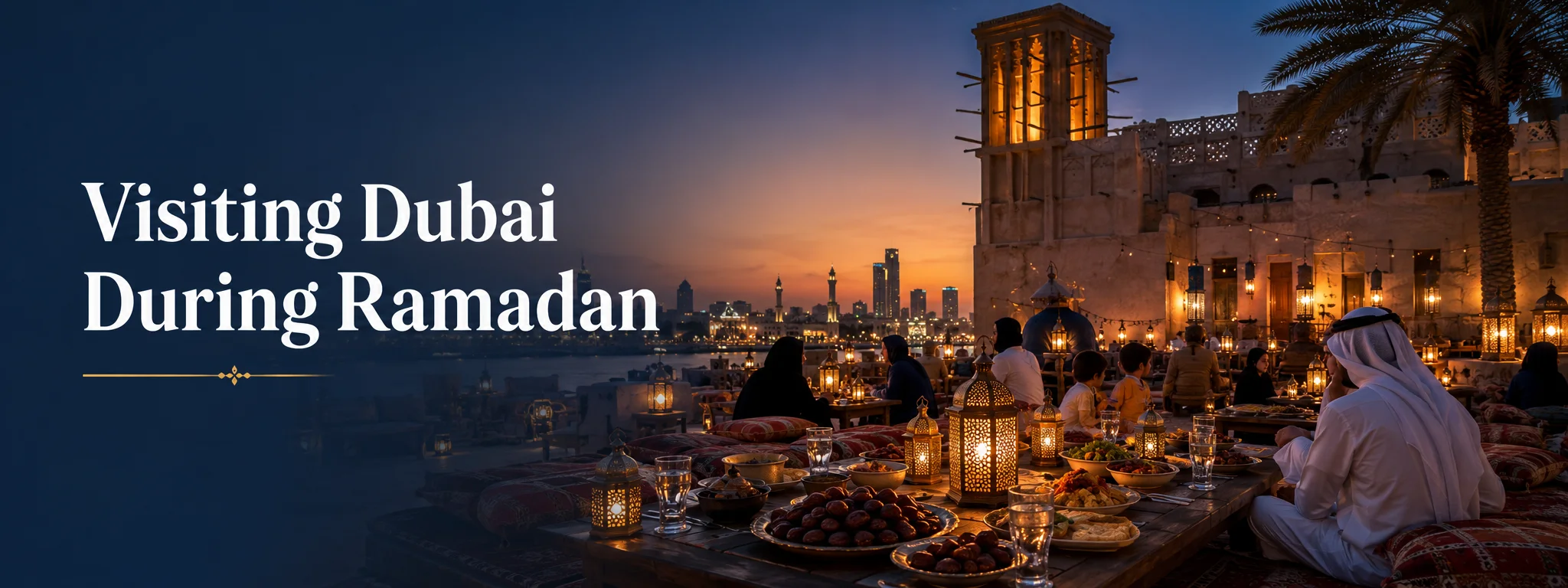
§ 01 — What Ramadan is
A month that changes Dubai’s rhythm, not a reason to avoid the city
Ramadan is the ninth month of the Islamic lunar calendar and the holiest month of the year for Muslims. Capable Muslims fast from dawn until sunset, abstaining from food and drink while placing greater emphasis on prayer, reflection, charity and community. In the UAE, the start and end of the month are determined by official moon-sighting announcements, so travellers should avoid treating an estimated calendar date as final.
For visitors, the most important point is simple: non-Muslims are not required to fast. Dubai remains open to tourism. Malls, attractions and cultural sites continue operating, restaurants provide daytime dining options, and after sunset the city becomes especially social and lively.
Ramadan can be a very rewarding time to visit because it reveals a side of Dubai that is easy to miss on an ordinary beach-and-attractions holiday. The pace changes, families gather for iftar, charitable activity becomes more visible, and late-evening streets and malls can feel more animated than the afternoon.
§ 02 — The daily rhythm
What changes from pre-dawn to late evening
Suhoor and dawn
Suhoor is the pre-dawn meal before the fast begins. Its exact timing changes through the month with prayer times. If you are staying in a hotel during Ramadan, ask about breakfast and suhoor arrangements rather than relying on generic times copied from another year.
Morning
The city is generally quieter. Attractions can be pleasant to visit early, especially before the hottest part of the day. Businesses may run adjusted schedules, although the UAE Government notes that supermarkets and grocery shops continue operating and malls commonly stay open late.
Afternoon
This is the period when many fasting residents are conserving energy. Keep your own sightseeing realistic, particularly in hot weather. Government and private-sector working patterns also change during Ramadan; UAE labour rules reduce normal daily working hours by two hours.
Sunset and iftar
Iftar is the meal that breaks the day’s fast. The UAE tradition commonly begins with dates and a drink before the larger meal. Around sunset, transport and restaurant demand can shift quickly as people travel to join family, friends and colleagues.
After iftar
Dubai often becomes much busier. Families shop, dine and visit well into the evening, while restaurants offer iftar and suhoor menus. This is the best time for visitors who want to experience the social side of Ramadan rather than merely work around it.
§ 03 — Eating and drinking as a visitor
You can eat during the day — plan it respectfully
Older travel advice often tells non-Muslim visitors that daytime eating is impossible. That is no longer a useful description of Dubai. UAE Government guidance says non-Muslims can find daytime dining in shopping malls, with restaurants and food courts providing designated areas away from people who are fasting. Hotels also commonly maintain food service for guests, although individual outlets may adjust opening hours.
The respectful approach is to use the venues that are operating for daytime service rather than making a performance of eating or drinking around people who are fasting. If you are on a long outdoor sightseeing day, identify a mall, hotel or open restaurant where you can take a proper break.
Do not assume every restaurant follows the same schedule. Some outlets close or shorten daytime hours and reopen fully for iftar. Check the individual venue on the day, especially if a reservation matters.
§ 04 — Attractions and sightseeing
Most visitor activities continue
The UAE Government states that amusement parks, restaurants, cultural sites and tourist attractions remain open through the day during Ramadan. The important variable is hours: an attraction may adjust its schedule, last entry or entertainment programme for the month.
Build a Ramadan itinerary around the rhythm of the day. Indoor attractions and museums work well earlier; allow breathing space near sunset; use evenings for neighbourhood walks, malls, food and Ramadan events. Avoid booking a sequence of time-critical activities across iftar unless you have checked transport and operating hours carefully.
For desert safaris, live entertainment, alcohol service and camp programming may change during Ramadan. Check your operator’s current Ramadan notes before booking rather than assuming the standard-season product is identical.
§ 05 — Iftar
How to experience the breaking of the fast without turning it into a spectacle
Iftar is one of the most memorable Ramadan experiences available to visitors, and non-Muslims are welcome at many restaurant and hotel iftars. You do not need an extravagant luxury buffet to participate meaningfully. The key is understanding that for Muslim families it is first a religious and communal moment, not merely a themed dinner.
Arrive on time, follow the host venue’s guidance and be patient in the minutes around sunset. Dates are closely associated with breaking the fast in the UAE, and meals often move from a simple opening into a much larger spread. Many restaurants present Emirati and regional dishes alongside international food.
How to choose an iftar
- Hotel buffet: easy for first-time visitors, often large and polished.
- Emirati or regional restaurant: a better option if the food itself matters more than spectacle.
- Community or cultural programme: potentially the most meaningful, but follow the organiser’s participation and dress guidance.
- Small dinner with residents: if genuinely invited, this can be more memorable than any commercial package. Bring warmth and curiosity rather than treating the occasion as content.
Prices and venue line-ups change every Ramadan, so this guide deliberately does not publish a list of “best” 2026 buffets as if it were evergreen. Check current menus directly when you travel.
§ 06 — Suhoor and late nights
Ramadan Dubai often starts its second shift after dinner
Suhoor is the meal before dawn, but in Dubai the term also appears on late-night hotel and restaurant programmes. Malls stay open late, Ramadan markets and seasonal events can run well into the evening, and popular districts become active after iftar.
If you usually start sightseeing at 8am and sleep early, consider shifting your schedule. A later morning, relaxed afternoon and long evening can fit Ramadan Dubai better than trying to force a normal high-season timetable onto the month.
Transport demand can be uneven. UAE Government guidance specifically warns that taxis may be harder to find around the evening period while drivers break their fast, so reserve extra time or book in advance when a fixed dinner reservation matters.
§ 07 — Dress and behaviour
Respect the month without inventing extra rules
Ramadan is a good time to lean slightly more conservative in public dress and behaviour, especially around mosques, cultural sites and community events. The useful principle is respect, not anxiety. Dubai remains a cosmopolitan tourism city, and visitors are not expected to imitate religious observance they do not follow.
Keep public behaviour considerate. Avoid disruptive loud music or boisterous conduct around people marking the month. If visiting a mosque or religious programme, follow that venue’s dress and access rules. “Ramadan Kareem” and “Ramadan Mubarak” are widely used greetings and are appropriate to receive or offer warmly.
Be cautious with old internet lists claiming dozens of Ramadan-specific legal prohibitions. Rules and operating practices evolve. For anything with legal consequences, rely on current UAE/Dubai government guidance rather than a travel blog’s recycled checklist.
§ 08 — Transport and driving
Build slack into the sunset window
The hours around iftar can change traffic and taxi demand. People are trying to reach home, restaurants or family gatherings at the same time, while some drivers need a short break to eat. If you have a timed reservation, do not schedule a cross-city journey to arrive exactly at sunset.
RTA may adjust paid-parking or public-transport timings during Ramadan. The UAE Government advises checking local transport information because Ramadan parking schedules can change. Use current RTA channels during your visit rather than relying on last year’s timetable.
§ 09 — Shopping and opening hours
Late evenings are a feature, not a disruption
Supermarkets and grocery stores generally continue operating, while malls commonly stay open late. Some smaller businesses may run split or adjusted hours. If shopping is a major part of your trip, evenings can be excellent because the city becomes more social after iftar.
For essential errands, verify hours directly rather than assuming every shop follows a single Ramadan schedule. The same applies to government services, banks and specialist businesses.
§ 10 — Events and seasonal programmes
Expect Ramadan-specific experiences, but verify the current year
Dubai runs substantial Ramadan programming. In 2026, Visit Dubai’s official seasonal guide listed events across locations including Global Village, Dubai Mall, Downtown Dubai, Expo City and community venues. That demonstrates the scale of the month’s public programme — but it should not be copied forward as a 2027 event calendar.
When planning a future Ramadan trip, use Visit Dubai and the relevant venue’s current events calendar after the programme is announced. Seasonal markets, lighting, cultural activities and family events can be excellent additions to an itinerary, but dates and locations change.
§ 11 — Is Ramadan a good time to visit?
Yes, for the right traveller
Ramadan is especially good if you…
- want cultural context rather than only attractions and resorts;
- enjoy late dinners and lively evenings;
- are comfortable checking opening hours rather than following a rigid itinerary;
- want to experience iftar, Ramadan markets and a more community-focused side of Dubai.
You may prefer another month if you…
- want nightlife and entertainment to operate exactly as in the rest of the year;
- need every restaurant and activity to keep standard hours;
- prefer very early starts and quiet evenings;
- are unwilling to adapt around a culturally important month.
Ramadan should not be sold as automatically “cheaper” or “less crowded”. Demand varies by year, school holidays, events and travel markets. Price your actual dates instead of assuming a Ramadan discount.
§ 12 — First-timer checklist
What to check before you travel
- Confirm the officially announced Ramadan dates close to travel; moon sighting determines the start and end.
- Check your hotel’s breakfast, daytime dining and pool/beach service arrangements.
- Re-check attraction hours and entertainment programmes for the month.
- Leave extra time for transport around sunset.
- Book a good iftar if you want the experience, but verify the current menu and price directly.
- Use malls, hotels and operating restaurants for daytime meals.
- Dress and behave thoughtfully, especially around religious and cultural spaces.
- Shift some sightseeing into the evening to experience the city when Ramadan social life is strongest.